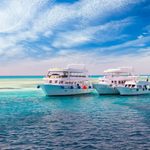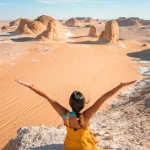

Egypt is often associated with the pyramids of Giza, the temples of Luxor, the Nile and the beaches of the Red Sea. Yet beyond these famous destinations lies a very different side of the country: remote oases where ancient traditions, desert landscapes and distinctive local cultures have survived for centuries.
Among the most fascinating is Siwa Oasis, a remarkable settlement in Egypt’s Western Desert, close to the Libyan border. Surrounded by dunes and rocky desert, Siwa appears almost like a green island in an ocean of sand. Thousands of date palms and olive trees grow around natural springs, while shimmering salt lakes create landscapes that seem almost unreal.
Siwa is also a place of extraordinary historical importance. In antiquity, the oasis was famous for the Oracle of Amun, a religious sanctuary that attracted visitors from across the ancient Mediterranean world. The most famous visitor was Alexander the Great, who traveled to Siwa in 331 BC to consult the oracle.
But history is only one part of Siwa’s appeal. The oasis has a distinctive Amazigh, or Berber, cultural identity, its own Siwi language, traditional crafts, unique architecture and a slower rhythm of life that feels very different from Egypt’s major tourist centers.
For travelers looking for an experience beyond conventional sightseeing, Siwa offers an opportunity to discover an Egypt of palm groves, salt water, desert sunsets, ancient ruins and living traditions.
Where Is Siwa Oasis?
Siwa Oasis is located in Egypt’s northwestern Western Desert, in Matrouh Governorate, approximately 50 kilometers east of the Egyptian-Libyan border. It lies hundreds of kilometers from Cairo and far from the major tourist centers along the Nile and Red Sea.
The oasis occupies a natural depression surrounded by desert. Parts of the depression are below sea level, creating unusual geographical conditions that allow groundwater to reach the surface and support agriculture in an otherwise extremely arid environment.
The location is one of the main reasons Siwa feels so different from other Egyptian destinations.
There are no large rivers flowing through the oasis. Instead, its greenery depends on underground water and natural springs. This water supports date palms, olive trees, vegetable gardens and other crops.
NASA’s Earth Observatory has described the oasis as a landscape supported by a large underground aquifer, which provides water for springs, agriculture and salt lakes despite the extremely dry climate.
The result is a striking contrast: golden desert outside, dense green vegetation inside, and brilliant blue or turquoise water scattered throughout the landscape.
The Geography of Siwa: An Oasis Surrounded by Desert
The geography of Siwa is central to understanding its character.
The oasis lies within a broad depression bordered by desert plateaus and sand dunes. Geological layers of limestone, marl and clay have shaped the landscape over millions of years. Natural springs emerge from underground water systems, while agricultural drainage contributes to the formation and expansion of saline lakes.
This unusual combination of water, salt, rock and sand creates several landscapes within a relatively compact area.
You can spend the morning walking among date palms, the afternoon floating in a salt lake and the evening watching the sun disappear behind desert dunes.
Palm Groves and Olive Orchards
The green heart of Siwa is its agricultural landscape.
Date palms are perhaps the most recognizable plants in the oasis. They grow in dense groves and have been an essential part of local life for generations. Dates are not only an important agricultural product but also an important element of Siwan culture and cuisine.
Olive trees are equally significant. Olive cultivation and olive oil production form an important part of the local economy.
Walking or cycling through the palm groves is one of the simplest ways to experience Siwa. Rather than rushing between monuments, visitors can slow down and appreciate the sounds, shade and fragrances of the oasis.
The contrast between the vegetation and surrounding desert is particularly impressive from elevated viewpoints.
From places such as Shali or nearby rocky hills, the oasis appears as a vast green carpet surrounded by an enormous sea of sand.
Siwa’s Salt Lakes
One of Siwa’s most visually striking features is its salt lakes.
These lakes vary in appearance according to the season, weather, water levels and surrounding landscape. Their surfaces can appear bright turquoise, deep blue or almost white where salt has accumulated around the edges.
The high salt concentration makes some of the lakes particularly buoyant. Visitors can often float easily in the water, creating an experience that resembles the Dead Sea.
However, travelers should always follow local advice about which lakes are suitable for swimming. Not every body of water in the oasis is intended for recreational use.
The lakes also demonstrate the complicated relationship between water and agriculture in Siwa. Fresh groundwater is used for irrigation, while drainage water eventually reaches saline areas. Research into Siwa’s architecture and hydrology has documented the relationship between springs, agricultural irrigation and salt lakes.
Why Is the Water So Salty?
The salinity is partly related to the geological conditions of the depression and the concentration of dissolved minerals through evaporation.
Siwa receives very little rainfall. NASA notes that the region averages only around 10 millimeters of rainfall annually, making its abundant water resources particularly remarkable.
As water evaporates under the desert sun, salts become increasingly concentrated.
This creates the unusual visual combination for which Siwa is famous: intensely blue water surrounded by white salt crusts and golden desert.
Natural Springs: The Lifeblood of Siwa
Before the development of modern infrastructure, natural springs were essential to survival in the oasis, and they remain an important part of its identity.
Siwa has roughly 200 springs, although individual sources and classifications can produce different numbers. These springs range from small pools to larger bodies of water.
Some are associated with agriculture, while others have become popular places for swimming and relaxation.
One of the most famous is Cleopatra’s Spring, a natural stone pool surrounded by greenery. Despite the romantic name, travelers should understand that the traditional association with Cleopatra is part of the site’s popular tourism identity rather than firm historical evidence that Cleopatra herself bathed there.
Another well-known destination is Fatnas Island, where visitors can enjoy a peaceful setting surrounded by water and palm trees.
The appeal of Siwan springs is not simply their beauty. They demonstrate how human settlement could flourish in one of the driest environments on Earth.
The Ancient History of Siwa Oasis
Siwa has a history stretching back thousands of years.
Archaeological evidence indicates ancient settlement in and around the oasis, while its strongest documented connection with Pharaonic Egypt became particularly significant during the Late Period.
The oasis developed into an important religious and trading center because of its strategic position and access to water.
Its distance from the Nile Valley also gave it a distinctive identity. For much of history, reaching Siwa required difficult desert travel.
That isolation helped preserve cultural traditions that developed differently from those of the Nile Valley.
The oasis later interacted with Greek, Roman and Arab worlds, creating layers of history that can still be seen in its archaeological remains.
The Oracle of Amun
The most famous chapter in Siwa’s ancient history is the Oracle of Amun.
The sanctuary was dedicated to Amun, one of the most important gods in ancient Egypt. In the Greek world, the deity became associated with Zeus Ammon.
The oracle became famous beyond Egypt, attracting people who sought divine guidance on important questions.
The remains of the Oracle Temple are located at Aghurmi, a historic settlement near modern Siwa.
Although much of the ancient complex has disappeared, surviving structures and inscriptions provide a powerful connection to the religious history of the oasis.
The temple dates to the Late Period and is associated with the 26th Dynasty. Archaeological research places the sanctuary within a wider landscape of ancient settlements and tombs around Siwa.
Alexander the Great and Siwa
The oracle’s most famous visitor was Alexander the Great.
In 331 BC, after conquering Egypt, Alexander traveled across the desert to Siwa to consult the Oracle of Amun.
The journey itself was remarkable. Traveling hundreds of kilometers through the desert was difficult even for experienced travelers, making Alexander’s decision to visit the sanctuary an important historical event.
Ancient accounts describe the oracle giving Alexander a response that reinforced his association with Amun and his legitimacy as ruler of Egypt.
Exactly what happened inside the sanctuary remains debated by historians, and many popular stories about the consultation cannot be independently verified.
Nevertheless, Alexander’s visit became one of the defining stories of Siwa’s history.
Today, standing among the ruins of the Oracle Temple and looking across the oasis makes it easy to understand why this isolated place could have inspired such powerful legends.
Shali: Siwa’s Extraordinary Traditional Architecture
One of the most recognizable landmarks in Siwa is Shali, the ruined historic settlement that rises above the modern town.
Its buildings were constructed using a distinctive local material known as kershif or karshif, made largely from salt-rich earth and mud.
The technique was highly adapted to the environment.
Salt blocks obtained from nearby saline areas were combined with mud mortar, while palm trunks were used in construction. Researchers studying Siwa’s historic architecture have documented how these locally available materials created buildings suited to the harsh desert environment.
The result is unlike the stone temples of Luxor or the limestone pyramids of Giza.
Shali has a softer, almost sculptural appearance. Its walls appear to emerge naturally from the rocky hill beneath them.
The settlement once served as a fortified community, with narrow passages and tightly packed buildings providing protection and shade.
Heavy rainfall in 1926 severely damaged the traditional mud-and-salt structures, and much of the old settlement was subsequently abandoned.
Today, the ruins remain one of Siwa’s most atmospheric places.
Walking through Shali at sunset is particularly memorable. The warm light emphasizes the texture of the walls, while views from higher points reveal palm groves and desert stretching toward the horizon.
Traditional Siwan Culture
Perhaps the most important reason to visit Siwa is not a particular monument.
It is the culture.
Siwa has a distinctive Amazigh heritage, and many local residents speak Siwi, an Eastern Berber language. The oasis developed in relative isolation for centuries, helping preserve customs, crafts and traditions that differ from those found in many other parts of Egypt.
Traditional Siwan culture can be seen in:
- Local clothing
- Embroidery
- Basketry
- Pottery
- Silver jewelry
- Traditional foods
- Agricultural practices
- Wedding traditions
- Local music and celebrations
- Siwi language and storytelling
For visitors, cultural tourism should be approached respectfully.
Siwa is not simply an open-air museum. It is a living community where people work, raise families, worship and maintain traditions.
Photographers should always ask permission before photographing individuals, especially during private ceremonies or family events.
Siwan Handicrafts
Traditional crafts are an important part of the oasis’s cultural heritage.
Basketry is particularly associated with local materials such as palm leaves. Since date palms are fundamental to the agricultural economy, using parts of the tree for practical and decorative objects represents a natural extension of oasis life.
Pottery, embroidery and jewelry are also part of Siwa’s craft tradition.
Traditional women’s clothing and ceremonial jewelry can be especially elaborate, with colors, patterns and ornaments reflecting local identity.
Purchasing locally made crafts is one of the easiest ways travelers can support the community.
Instead of buying mass-produced souvenirs imported from elsewhere, visitors can look for products genuinely made in Siwa.
Siwa’s Traditional Food
Food is another way to experience the oasis.
Dates and olives are naturally central to the local cuisine because they are among Siwa’s most important agricultural products.
Visitors can encounter dishes based on grains, vegetables, dates, olives and locally available ingredients.
Traditional meals are often simple but deeply connected to the environment.
In a desert oasis, food historically had to be produced, preserved or traded efficiently. The result is a cuisine shaped by agriculture, climate and cultural exchange.
Trying local dishes is therefore more than a culinary experience; it provides another way to understand how people adapted to life in an isolated desert environment.
Gebel al-Mawta: The Mountain of the Dead
Another important archaeological site is Gebel al-Mawta, or the Mountain of the Dead.
Located near Siwa town, this rocky hill contains numerous rock-cut tombs dating from different periods.
The tombs provide evidence of the oasis’s long history and connections with the wider ancient Egyptian world.
Some contain decorative elements and inscriptions that help archaeologists understand the beliefs and social structures of people who lived in Siwa centuries ago.
The site is particularly valuable because it adds another dimension to the oasis experience.
Siwa is not only about palm trees and salt lakes. Beneath the landscape are archaeological layers representing thousands of years of human activity.
Desert Landscapes and the Great Sand Sea
Beyond the cultivated oasis lies one of Siwa’s most dramatic environments: the desert.
The Great Sand Sea stretches across enormous areas of the Western Desert and creates an extraordinary setting for desert excursions.
A 4×4 journey into the dunes can transform the experience of Siwa completely.
Instead of green palms and freshwater springs, the landscape becomes dominated by waves of sand, open horizons and silence.
Desert excursions may include:
- 4×4 dune drives
- Sandboarding
- Sunset watching
- Traditional tea
- Desert camping
- Visits to remote springs
- Stargazing
The desert is particularly beautiful around sunset.
As the sun drops toward the horizon, the dunes change color from bright gold to orange, pink and deep brown.
After dark, the lack of major urban lighting can create excellent conditions for observing the night sky.
What Makes Siwa Different from Mainstream Egypt?
Siwa offers something that many travelers cannot find in Cairo, Luxor or Hurghada: distance from mass tourism.
This does not mean Siwa is completely untouched by tourism. Hotels, restaurants, excursions and local guides serve visitors every year.
But the scale and atmosphere are different.
1. A Distinct Cultural Identity
Siwa’s Amazigh heritage and Siwi language make it culturally distinctive within Egypt.
2. A Remote Location
The journey itself contributes to the experience.
Reaching Siwa requires considerably more planning than visiting the pyramids from Cairo or taking a boat trip from Hurghada.
3. Nature and Archaeology Together
Few Egyptian destinations combine palm groves, springs, salt lakes, dunes, ancient temples and historic architecture in such a concentrated landscape.
4. A Slower Pace
Siwa encourages travelers to stay longer and explore more slowly.
Instead of checking off famous monuments in a few hours, visitors can spend days walking, cycling, swimming, exploring ruins and enjoying the desert.
5. Living Traditions
The cultural heritage of Siwa is not limited to archaeological ruins. Local traditions continue in daily life.
How to Plan a Trip to Siwa Oasis
Siwa is a destination where planning matters.
Its remote location means visitors should not expect the same level of transport frequency or infrastructure available in Cairo, Hurghada or Luxor.
How Long Should You Stay?
A minimum of two nights can provide a basic introduction, but three or four nights allows a much better experience.
A longer stay gives travelers time for:
- Shali
- The Oracle Temple
- Gebel al-Mawta
- Salt lakes
- Natural springs
- Palm groves
- Desert excursions
- Local markets
- Sunset viewpoints
- Relaxation
Trying to see everything in one rushed day defeats much of the purpose of visiting Siwa.
How to Reach Siwa
Most travelers reach Siwa by road.
The journey from Cairo can take many hours, depending on the transportation method, route and road conditions. Current travel information should always be checked before departure because schedules and transportation arrangements can change.
Travelers can consider buses, private cars or organized tours.
A current travel guide notes that overnight buses are among the common options from Cairo, while private transportation can provide greater flexibility.
If you are already traveling around Egypt, Siwa can also be combined with destinations along the Mediterranean coast or other Western Desert locations.
When Is the Best Time to Visit?
The most comfortable months are generally the cooler periods of the year, particularly autumn, winter and spring.
Winter days can be pleasant, although nights may become surprisingly cold.
Summer can be extremely hot, especially during the middle of the day.
If you want to combine sightseeing with desert activities, cooler months are generally more comfortable.
What Should You Pack for Siwa?
Because Siwa is remote and desert conditions can be demanding, practical preparation is important.
Consider bringing:
- Lightweight clothing
- A warm layer for winter evenings
- Comfortable walking shoes
- Sunglasses
- Sunscreen
- A hat
- Reusable drinking water
- Personal medications
- A power bank
- Cash
- A small backpack
- Swimwear for suitable springs or salt lakes
- A camera or smartphone
Respectful clothing is also recommended, particularly when visiting local communities and religious or cultural sites.
Responsible Tourism in Siwa
Siwa’s greatest strength is also one of its vulnerabilities.
Its cultural identity and natural environment depend on careful management.
Visitors can help by avoiding unnecessary waste, respecting local customs and not damaging archaeological sites.
Do not remove salt, stones, pottery fragments or archaeological objects as souvenirs.
When swimming in springs or salt lakes, follow local guidance and avoid contaminating the water with sunscreen, soap or other substances.
Support local businesses when possible by purchasing locally produced crafts, eating at local establishments and hiring local guides.
Photography should also be respectful.
A beautiful photograph is never more important than someone’s privacy.
Siwa Compared with Other Egyptian Destinations
| Destination | Main Experience | Atmosphere |
|---|---|---|
| Cairo | Pyramids, museums, historic city | Busy and energetic |
| Luxor | Temples, tombs and ancient Egypt | Historical and archaeological |
| Hurghada | Red Sea, snorkeling and beaches | Resort and marine |
| Aswan | Nile, temples and Nubian culture | Relaxed and riverside |
| Siwa | Oasis, salt lakes, desert and local culture | Remote and peaceful |
This comparison explains why Siwa is particularly attractive to repeat visitors.
Someone who has already seen Egypt’s major monuments can discover a completely different landscape and cultural environment.
Can You Combine Siwa with a Hurghada Holiday?
Yes, although the distance means it requires careful planning.
Travelers staying in Hurghada often focus on the Red Sea, including snorkeling, diving, boat trips and desert safaris. Siwa provides almost the opposite experience: freshwater springs, salt lakes, ancient oasis culture and the Western Desert.
If your itinerary includes several regions of Egypt, an experienced operator can help organize transportation and excursions around your main route.
For travelers researching excursions and multi-destination experiences, Best Tours Hurghada can be a useful point of reference when considering how to combine a Red Sea holiday with broader exploration of Egypt.
The key is to avoid treating Siwa as a quick side trip. Its remote location makes it more rewarding when integrated into a well-planned itinerary.
Photography in Siwa
Siwa is a dream destination for photographers.
The variety of landscapes creates opportunities throughout the day.
Sunrise
Early morning light over palm groves creates soft shadows and warm colors.
Midday
The contrast between intense blue water, white salt and green vegetation can produce dramatic images.
Sunset
Shali and the surrounding desert are especially photogenic when the sun is low.
Night
The remote location can provide excellent opportunities for astrophotography and star-filled landscapes when weather and local conditions are suitable.
Remember to respect people and private property when photographing the oasis.
Why Siwa Should Be on Your Egypt Travel List
Siwa Oasis represents an Egypt that many first-time visitors never see.
It has no giant pyramid dominating the skyline.
There is no Nile cruise passing through the center of town.
There are no huge resort complexes stretching along a coastline.
Instead, Siwa offers something quieter and more intimate.
It offers palm trees moving in the desert wind.
It offers salt lakes shining under an enormous sky.
It offers springs surrounded by vegetation.
It offers ruined walls built from salt and mud.
It offers ancient tombs and the remains of a famous oracle.
It offers a culture shaped by centuries of relative isolation.
And it offers the feeling of standing in a place where geography and history are inseparable.
Frequently Asked Questions About Siwa Oasis
Is Siwa Oasis worth visiting?
Absolutely. Siwa is particularly worthwhile for travelers interested in nature, history, culture, photography and destinations away from Egypt’s busiest tourist routes.
Is Siwa safe for tourists?
Siwa is a recognized tourist destination, but because it is remote, travelers should plan carefully and follow current local travel guidance. Organized transportation and reputable local guides can make the experience easier.
How far is Siwa from Cairo?
Siwa is roughly 560 kilometers from Cairo according to commonly cited geographic references, although actual road travel distances and journey times depend on the route.
Can you swim in Siwa’s salt lakes?
Some salt lakes are used recreationally and can be extremely buoyant. However, visitors should use designated or locally recommended locations rather than entering any body of water without guidance.
What is Siwa famous for?
Siwa is famous for its salt lakes, palm groves, natural springs, Amazigh heritage, traditional architecture, desert landscapes and the ancient Oracle of Amun.
Did Alexander the Great really visit Siwa?
Ancient historical traditions state that Alexander visited the Oracle of Amun at Siwa in 331 BC. The visit is one of the most famous episodes in the oasis’s history.
What is Shali?
Shali is the historic fortified settlement in Siwa. Its traditional buildings were constructed from salt-rich material and mud, creating distinctive architecture adapted to the oasis environment.
How many days do you need in Siwa?
Two nights can provide an introduction, but three or four nights are better if you want to combine archaeology, cultural experiences, salt lakes, springs and a desert excursion.
Final Thoughts: Discovering the Other Egypt
Siwa Oasis is not simply another destination to add to an Egypt itinerary.
It is a different way of experiencing the country.
Here, the desert is not an empty space between attractions. It is part of everyday life.
Water is not taken for granted. It creates the oasis itself.
Palm trees are not merely decorative. They are central to agriculture and local traditions.
Salt is not simply a mineral. It helped shape the architecture.
Ancient ruins are not isolated monuments. They exist alongside a living community whose cultural identity has been shaped by the oasis for generations.
From the ruins of the Oracle of Amun to the walls of Shali, from the palm groves to the brilliant salt lakes, Siwa brings together natural beauty, archaeology and living culture in a way few destinations can match.
For travelers who want to go beyond the standard pyramid-and-beach itinerary, Siwa offers an unforgettable opportunity to discover one of Egypt’s most distinctive landscapes.
And that is perhaps the greatest attraction of all: Siwa does not simply show you another part of Egypt—it shows you another side of Egypt.